Emergency Services Training


The Health and Safety Institute (HSI) provides education and training focused on workplace health, safety, and regulatory compliance. Its programs help students and staff develop essential safety knowledge, meet industry standards, and promote safer learning and working environments. Certifications meet widely accepted guidelines and are valid for two years.
-
This lesson will teach you to minimize your risk of exposure to bloodborne pathogens in the workplace as well as how to respond to a potential exposure.
-
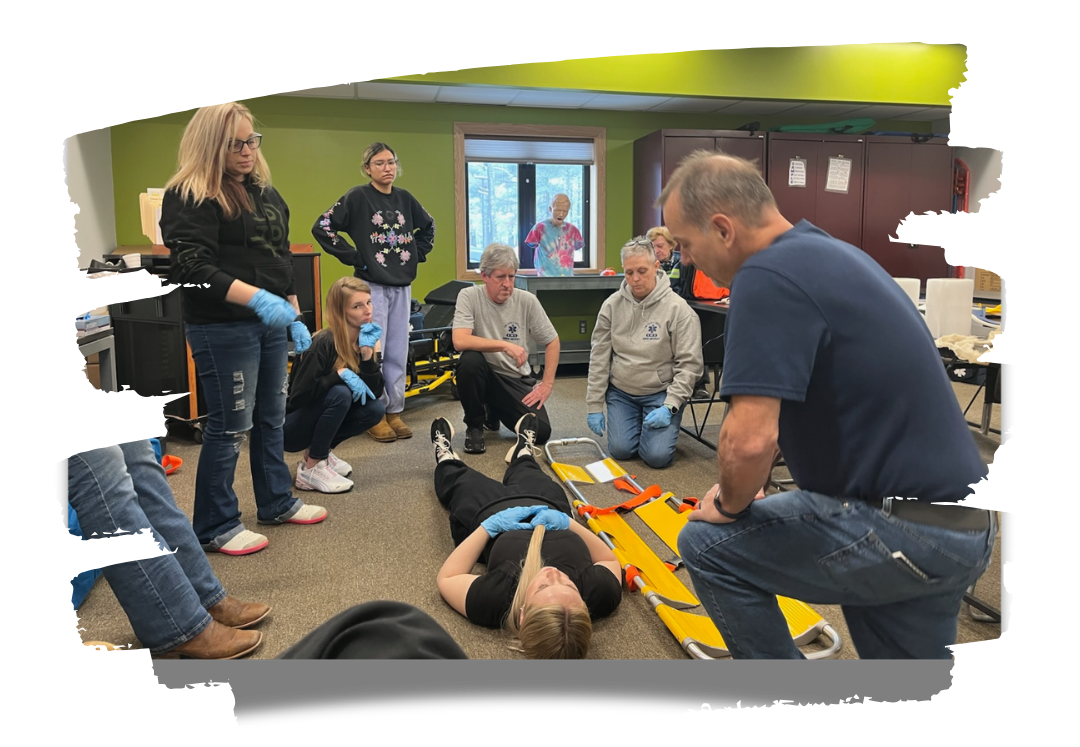
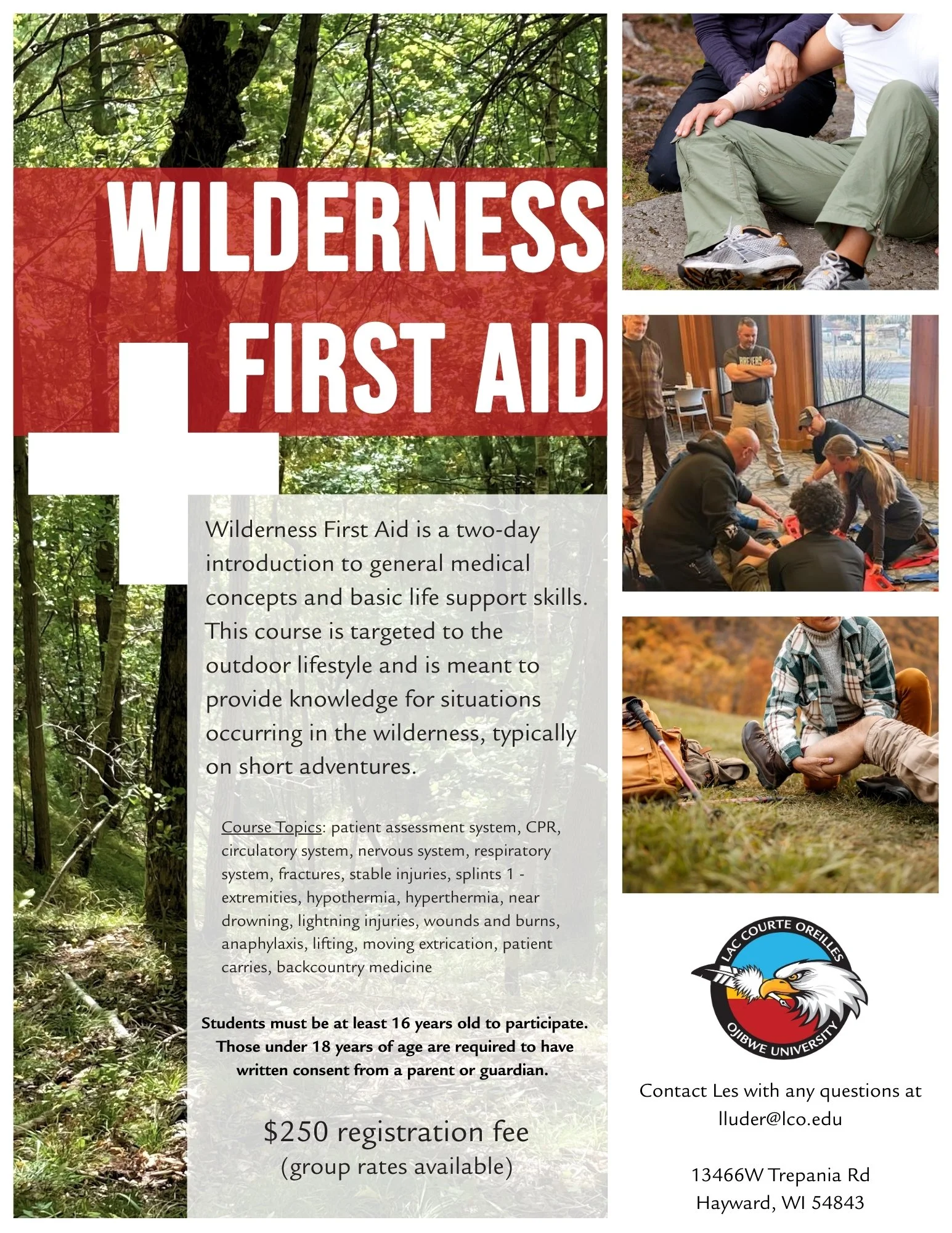
This training prepares participants to recognize, assess, and manage medical emergencies when professional care is delayed or unavailable. This two-day (16-hour) course focuses on patient assessment, decision-making, and practical interventions in remote or outdoor environments, including management of injuries, environmental emergencies, bleeding control, splinting, and medical illnesses. Emphasis is placed on improvisation, problem-solving, evacuation considerations, and maintaining patient safety with limited resources. A minimum of six participants is required to run the course, and successful completion results in certification being valid for two years.
Class length: 16 hours
Cost: $250
-
HSI Child & Babysitting Safety training prepares participants to provide safe, responsible care for infants and children. The course focuses on injury prevention, basic first aid, emergency response, and age-appropriate supervision, along with strategies for managing common childhood situations and emergencies. Topics include safe caregiving practices, recognizing illness or injury, responding to choking and breathing emergencies, and understanding personal responsibility and professionalism while caring for others. This course is designed to build confidence and practical skills for babysitters and caregivers, with certification valid for two years.
Class length: 4 hours
Cost: $75
-
This class is designed to help participants gain or improve knowledge and skill proficiency in adult first aid, CPR (cardiopulmonary resuscitation), and the use of an AED (automated external defibrillator). The training reflects the latest resuscitation science and treatment recommendations from the International Liaison Committee on Resuscitation (ILCOR) and conforms with the 2020 American Heart Association (AHA) guidelines for CPR and emergency cardiovascular care.
Intended Audience:
This course is intended for individuals who are not healthcare providers or professional rescuers but who desire or are required (e.g., workplace requirement) to be trained and certified in adult first aid, CPR, and AED use.Certification:
Upon successful completion, participants receive a certification valid for 2 years.Class length: 4.5 hours
Cost: $45
-
Emergency Services training at our university includes a range of practical, skills-based offerings designed to promote safety, preparedness, and rapid response in emergencies. These training courses include various levels of CPR certification, wilderness first aid, babysitting safety, and EMS refresher courses. Together, these offerings emphasize lifesaving skills, situational awareness, effective decision-making, and appropriate responses across community, outdoor, and clinical settings, supporting both professional development and public safety readiness.
Our university offers training and certification through the Health & Safety Institute (HSI), a nationally recognized organization that provides accessible, skills-based education for healthcare providers, students, and community members. HSI courses emphasize practical application, real-world scenarios, and flexible learning formats while aligning with current evidence-based guidelines. Certifications are widely accepted across healthcare, education, childcare, and community settings.
We also offer training and certification through the American Heart Association (AHA), the gold standard for resuscitation education in many clinical and hospital-based environments. AHA courses focus on high-quality CPR, team dynamics, and adherence to the most current resuscitation of science and guidelines. AHA certifications are commonly required for healthcare professionals working in acute care, hospital, and advanced clinical settings.
In a nutshell
In general, HSI certification is well-suited for students, community members, and non-acute care settings, while AHA certification is typically preferred or required for hospital-based and advanced clinical roles.
Health and Safety Institute Training Courses
American Heart Association Training Courses
For Medical Providers
-
Cost: $65
The AHA Basic Life Support (BLS) Provider course is an instructor-led class and teaches both single-rescuer and team basic life support skills for application in both prehospital and in-facility environments. The AHA’s BLS Course is designed for healthcare professionals and other personnel who need to know how to perform CPR and other basic cardiovascular life support skills in a wide variety of in-facility and prehospital settings.
THE BLS CLASS COVERS
• High-quality CPR for adults, children, and infants
• The AHA Chain of Survival
• Important early use of an AED
• Effective ventilations using a barrier device
• High Performance Teams
• Relief of choking for adults, children, and infants
-
Cost: $75
HeartSaver CPR/AED course is geared for anyone with limited or no medical training who needs a course completion card in Pediatric and Adult CPR/AED use to meet job, regulatory, or other requirements. Upon successful completion of the course, students receive a course completion card, valid for two years.
-
Cost: $75
HeartSaver First Aid course teaches you the basics for the most common first aid emergencies, including how to recognize them, how to call for help, and how to perform lifesaving skills.
-
Cost: $125
HeartSaver First Aid/CPR/AED course is geared towards anyone with little or no medical training who needs a course completion card for their job, regulatory (e.g., OSHA), or other requirements or anyone who wants to be prepared for an emergency in any setting. Upon successful completion of the course, students receive a course completion card, valid for two years.
-
Registration links and payment options are in the course description
Emergency Medical Services Training
-
The Emergency Medical Responder (EMR) course provides foundational education in prehospital emergency care for individuals responding to medical and traumatic emergencies. The curriculum follows the Wisconsin Department of Health Services scope of practice and the National EMS Education Standards, emphasizing the systematic assessment and management of patients in emergency settings.
Students develop competencies in patient assessment, basic airway management, hemorrhage control, cardiopulmonary resuscitation, automated external defibrillator (AED) use, and the recognition and management of common medical and traumatic conditions. Instruction integrates didactic content with psychomotor skills training and scenario-based simulations to promote clinical reasoning, professionalism, and effective communication within the emergency medical services system.
Successful completion of the course prepares students to meet eligibility requirements for the Wisconsin Emergency Medical Responder certification examination and provides an academic foundation for continued study in emergency medical services, health sciences, or public safety disciplines.
Class length: 70 hours
Emergency Medical Responder Registration
-
This course provides systematic training for students seeking to expand the knowledge, rolls, and skills of an EMT. Students will be taught the essential skills of obtaining intravenous and intraosseous access, advanced airway management, pharmacological interventions, and fluid therapy. Extensive knowledge of pathophysiology, anatomy, pharmacology, clinical judgement, and critical thinking are integrated throughout the curriculum. Students completing the course will then be equipped to perform comprehensive patient assessments and develop treatment plans based on clinical differential diagnosis for both medical and trauma patients.
This course meets the AEMT NEMS Scope of Practice, 2019 NEMS AEMT Education Standards, and 2026 WI AEMT Scope of Practice and qualifies the students to obtain State of Wisconsin AEMT certification and to certify with the National Registry of Emergency Medical Technicians at the AEMT level.
Prerequisites
· Must hold a current EMT license with the state of Wisconsin
· Must hold current CPR AHA BLS-Provider license
· Must pass a Wisconsin background check
Class Information
Instructional Level: Certification
Total Hours: 180
Types of Instructions:
· In-person classroom (lecture/demonstration/discussion)
· Independent/ asynchronous learning (recorded lecture, worksheets, reviews)
· On-campus labs (hands-on skills and simulation)
Advanced Emergency Medical Technician (AEMT) Course Registration and Payment
-
The Emergency Medical Responder (EMR) Refresher course is a fully online, self-paced continuing education offering designed to support the maintenance of certification for currently licensed EMRs in Wisconsin. The curriculum aligns with Wisconsin Department of Health Services continuing education requirements and reviews essential prehospital emergency care knowledge within the EMR scope of practice.
Course content reinforces core competencies, including patient assessment, airway and breathing management, circulation and shock recognition, medical and traumatic emergencies, and EMS operations. Instruction is delivered through asynchronous online modules that emphasize evidence-based practice, clinical decision-making, and professional standards within the emergency medical services system.
Students are provided with a three-month enrollment period to complete all required coursework, allowing flexibility for working professionals. Successful completion satisfies the Wisconsin EMR refresher education requirement for relicensure and may be documented for submission through the Wisconsin EMS e-licensing system. Current CPR certification is required for renewal, but is not included in this course.
Emergency Medical Responder (EMR) Refresher Course Registration and Payment
-
The Emergency Medical Technician (EMT) Refresher course is a fully online, self-paced continuing education offering designed for currently licensed EMTs seeking to maintain Wisconsin certification. The curriculum aligns with Wisconsin Department of Health Services continuing education requirements and the National EMS Education Standards, providing a comprehensive review of foundational prehospital emergency care within the EMT scope of practice.
Course content emphasizes patient assessment, airway and ventilation management, oxygen therapy, cardiovascular and respiratory emergencies, trauma care, medical emergencies, and EMS operations. Instruction is delivered through asynchronous online modules that reinforce clinical decision-making, evidence-based practice, and professional responsibilities within the emergency medical services system.
Students are provided with a three-month enrollment period to complete all required coursework, allowing flexibility for working professionals. Successful completion satisfies the Wisconsin EMT refresher education requirement for relicensure and may be documented for submission through the Wisconsin EMS e-licensing system. Current professional-level CPR certification is required for renewal, but is not included in this course.
Emergency Medical Technician (EMT) Refresher Course Registration and Payment
-
The Wisconsin AEMT Refresher Course is a 50-hour online refresher program designed for currently licensed Advanced Emergency Medical Technicians (AEMTs) seeking to meet the Wisconsin Department of Health Services (DHS) continuing education requirements for AEMT license renewal.
This course is based on the Wisconsin AEMT curriculum and provides a comprehensive review of the knowledge and clinical concepts necessary for the practice of advanced emergency medical care.
Course Format
100% online
Self-paced
No required in-person classroom sessions
Three-month completion window
Complete coursework from a computer or compatible device with reliable internet access
Designed for Wisconsin AEMTs seeking refresher education for license renewal
Course Content
The course reviews essential AEMT knowledge and competencies, including:
Patient assessment and clinical decision-making
Airway and respiratory emergencies
Cardiovascular emergencies
Medical emergencies
Trauma and shock
Neurological emergencies
Endocrine and diabetic emergencies
Pharmacology and medication administration
Pediatric and geriatric emergencies
Special patient populations
Operations and EMS safety
Current EMS practices and patient care considerations
Wisconsin Renewal Requirements
Wisconsin DHS requires 50 hours of AEMT refresher education based on the Wisconsin AEMT curriculum for the applicable renewal pathway. This course is designed to meet that 50-hour refresher education requirement.
Wisconsin DHS permits online/distributive learning for EMS renewal education. Participants are responsible for meeting all other applicable Wisconsin EMS renewal requirements, including CPR and any other requirements established by DHS.
Course Completion
Participants must successfully complete all required coursework and assessments within the three-month course access period.
Upon successful completion, the training center will document the participant's completion in accordance with Wisconsin DHS EMS requirements.
Course: Wisconsin AEMT Refresher
Hours: 50 hours
Format: 100% online/self-paced
Completion Window: 3 months
Audience: Currently licensed Wisconsin AEMTs
Provider: Lac Courte Oreilles Ojibwe University EMS Training CenterAdvanced Emergency Medical Technician (AEMT) Refresher Course Registration and Payment
-
Wisconsin Paramedic Refresher Course – 100% Online
The Wisconsin Paramedic Refresher Course is a 60-hour online refresher program designed for currently licensed Paramedics seeking to meet the Wisconsin Department of Health Services (DHS) education requirements for Paramedic license renewal.
This course is based on the Wisconsin Paramedic curriculum and provides a comprehensive review of the knowledge and clinical concepts necessary for the safe and effective practice of advanced prehospital emergency medical care.
The course is offered 100% online and self-paced, allowing practicing Paramedics to complete their required refresher education on a flexible schedule.
Course Format
60 hours of education
100% online
Self-paced
Three-month completion window
No required in-person classroom sessions
Accessible from a computer or compatible device with reliable internet access
Course Content
The course provides a comprehensive review of essential Paramedic knowledge and clinical practice, including:
Patient assessment and clinical decision-making
Airway management and respiratory emergencies
Cardiovascular emergencies and cardiac care
Cardiac arrest and resuscitation
Medical emergencies
Neurological emergencies
Endocrine and diabetic emergencies
Toxicology and overdose management
Trauma and shock
Pharmacology and medication administration
Pediatric emergencies
Obstetric and neonatal emergencies
Geriatric emergencies
Behavioral and psychiatric emergencies
Environmental emergencies
Special patient populations
EMS operations, safety, and leadership
Current prehospital emergency medical care practices
Wisconsin License Renewal
Wisconsin DHS requires 60 hours of Paramedic refresher education based on the Wisconsin Paramedic curriculum for the applicable Paramedic renewal pathway. Wisconsin DHS permits EMS renewal education to be completed entirely online.
Participants are responsible for meeting all other applicable Wisconsin Paramedic renewal requirements, including required CPR and ACLS certification and any other requirements established by Wisconsin DHS.
Course Completion
Participants must successfully complete all required online coursework and assessments within the three-month course access period.
Upon successful completion, LCOOU's Wisconsin EMS Training Center will document the participant's completion in accordance with Wisconsin DHS EMS requirements. For a refresher completed through a Wisconsin EMS Training Center, the training center enters the education directly into the Wisconsin E-Licensing system.
Course: Wisconsin Paramedic Refresher
Hours: 60 hours
Format: 100% online/self-paced
Completion Window: 3 months
Audience: Currently licensed Wisconsin Paramedics
Provider: Lac Courte Oreilles Ojibwe University EMS Training Center

Emergency Services Team